Go back
Telstra Connect International Store
Project Overview
Telstra is a global technology company that empowers businesses to thrive in a connected world. They deliver transformational experiences through innovative connectivity, collaboration and IT solutions, via one of the world’s most advanced networks.
My role: UX/UI Designer
Team: Product Manager, Content Strategist, UX Writer, UX Designers, UI Designer, and Developers.
Tools: Sketch, Axure, Miro
Goal:
Unifying the buying experience, creating a perception of one store for all products. Reducing the effort of the customers in selecting the product family and contract allowing them to make an informed decision at the start of the ordering process. This would reduce the number of abandoned digital sales.
The Old Process
The process of ordering a product from Telstra Connect involves several steps. Users begin by visiting the Telstra Connect website to view available products. Next, they must call sales to initiate the order, which then undergoes pricing by the quoting and pricing team via email. This process can lead to delays due to back and forth communication, causing users frustration. If satisfied with the price, users must sign an order form and contract, after which the service delivery team provides the product or service. The entire process can take up to a month, potentially dissuading users from completing their orders.

The Problem
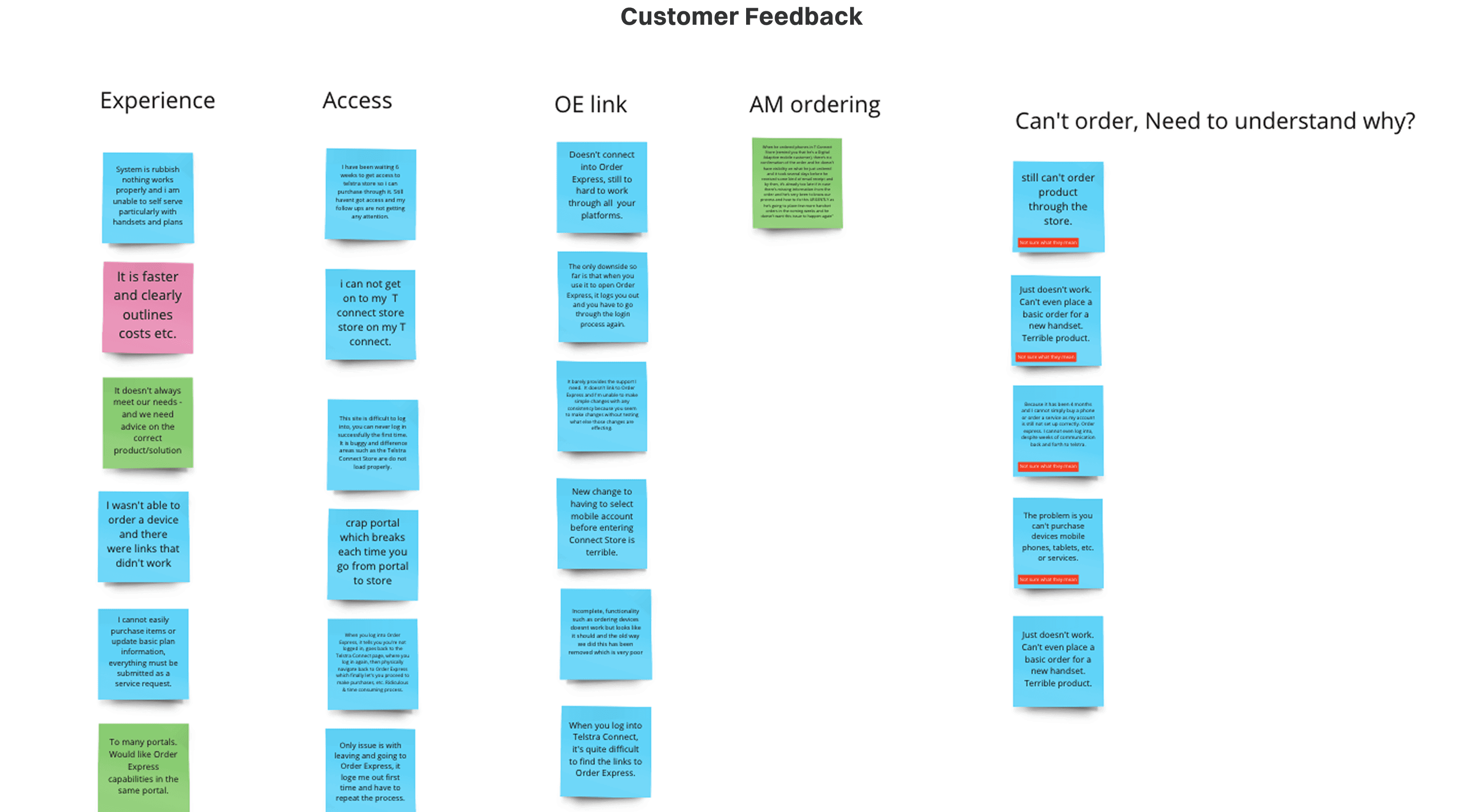
Currently, users cannot view, browse, and purchase enterprise products through Telstra Connect, leading them to resort to non-digital channels, which are time-consuming and less preferable. There is no digital pathway to initiate a sales journey, and users lack visibility of the latest offers and product information. A major complaint from user feedback is the inability to view, compare, or order Telstra products via Telstra Connect.
Hypothesis
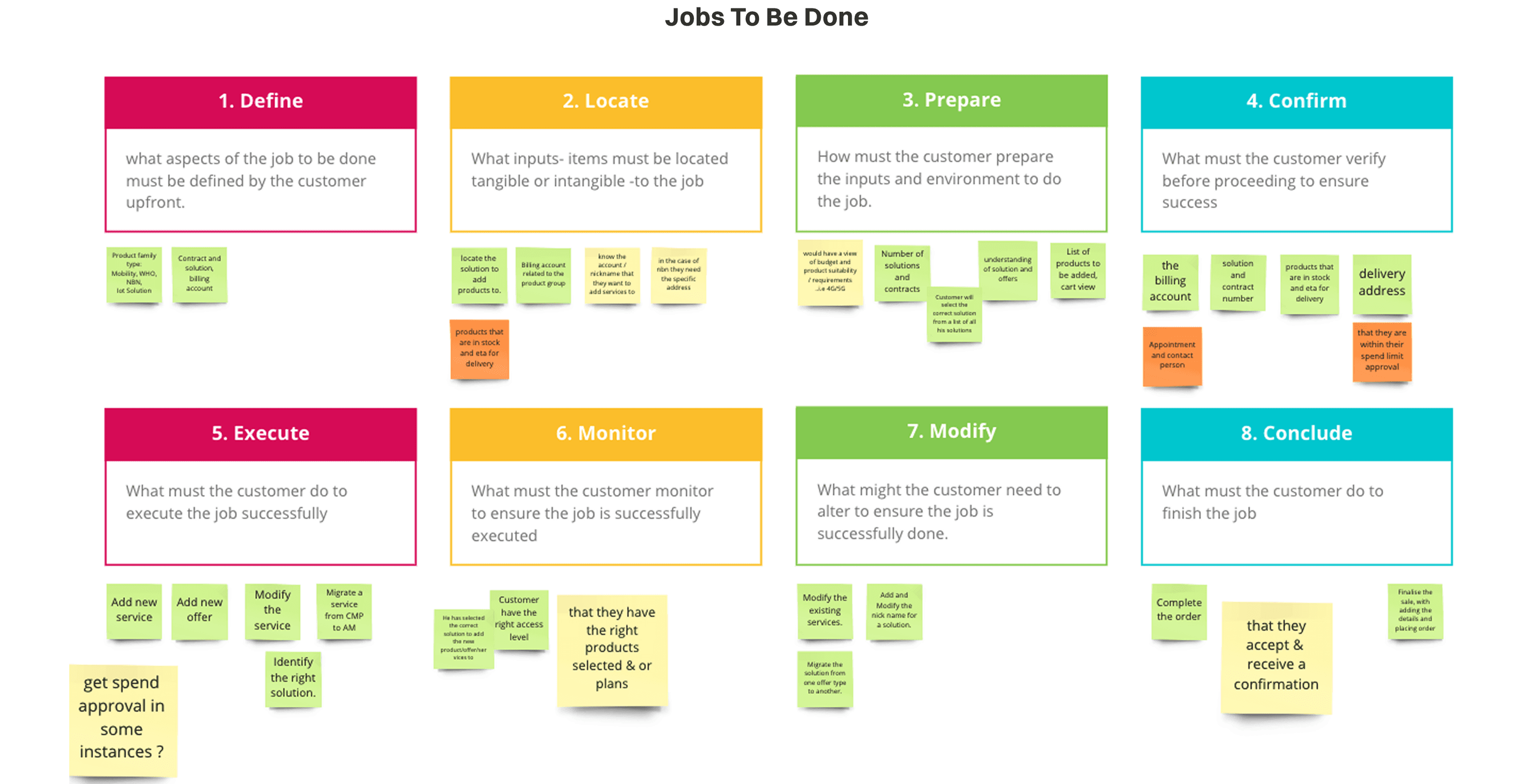
We believe that if we...
Create a landing page for the Telstra Connect store that allows users to act, view all products with digital journeys, and create a lead using Sales support for all other enterprise products.
We Will...
So that we will be able to remove a big pain point for our customers who are saying, "I can't view, compare or order any Telstra Products using Telstra Connect."
Because...
The users would have a view of the full range of Telstra Enterprise products and be able to place orders for the ones with digital journeys and generate leads using the sales support feature for the rest of the products.
Competitor Analysis
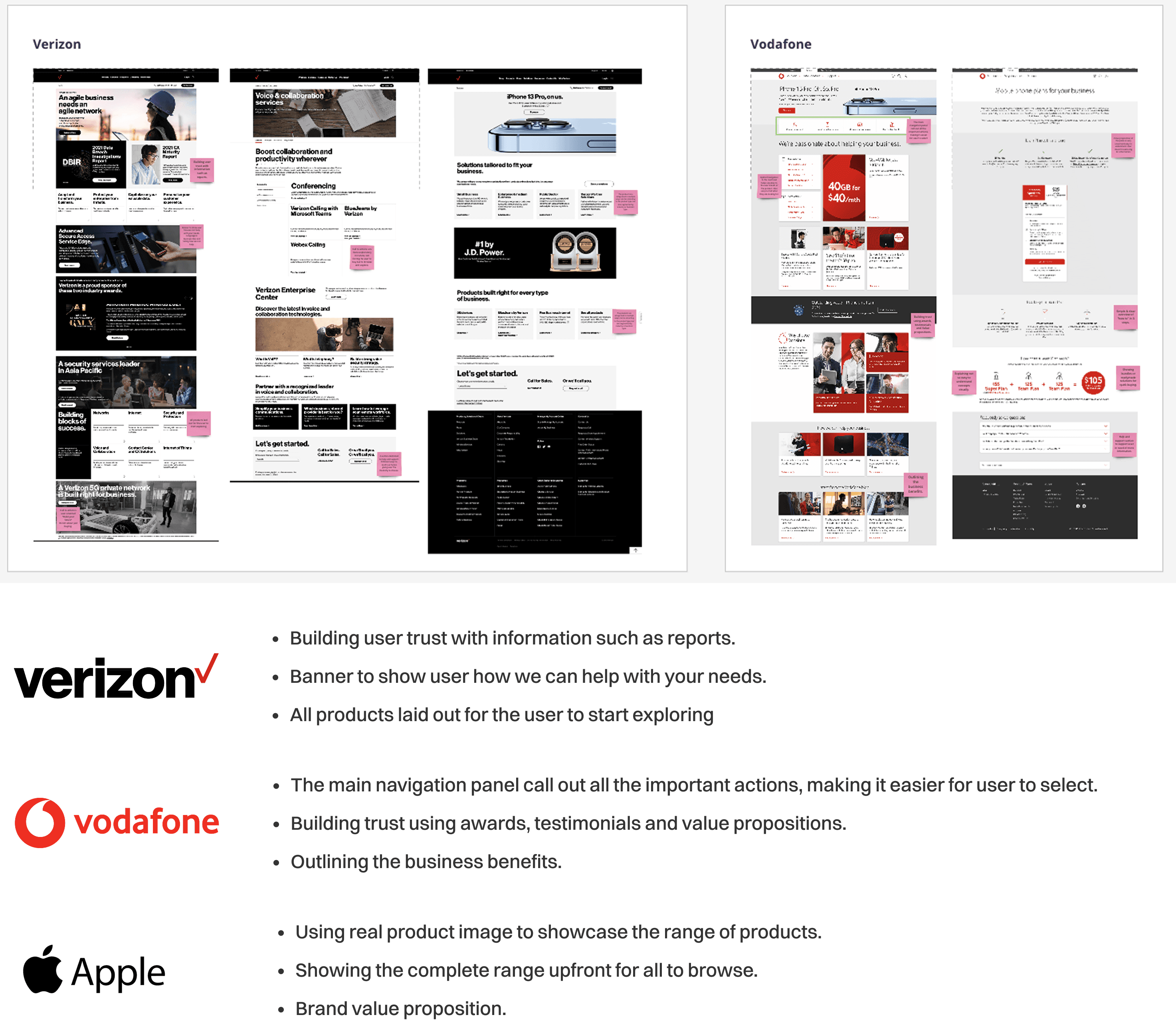
I studied three local competitors to understand what's effective in the market, identify areas for improvement, and incorporate those insights into my own design. With that, I found these three competitors:
Customer Research Insights
After analyzing our competitors, I worked with our UX researcher to gather insights and pain points from customer research. I aimed to directly understand our users' experiences to tailor the final product to their needs, prioritizing their feedback. Hearing directly from users is crucial in this process.
So, with 7 interviewees who were able to try ordering through the old process, our researcher asked them the questions below to find the trends on why they failed to complete the ordering journey compared to the others.
Tell me about the order that you made?
What motivated you to buy in the first place?
What was your overall process for trying to buy that product or service?
What was the most difficult part about trying to buy that product or service? Why?
Were you able to complete the ordering journey? If not, why?
Interview outcome
So with that, I consolidated all the data through affinity mapping, trying to find the same trends together eventually forming 9 key insights and 3 main themes.
Visibility
No way to access information for contracts, plans, bills and usage during the ordering journey.
Users have no visibility of the latest offers and products information to help them guide in their purchasing decision.
Efficiency
Users are always chasing up sales inquiries as there is no clear digital sales channel that can meet their expectations.
Users need to rely on non digital channels for purchasing which is time consuming and is not a channel of choice.
Direct
Users have limited view of enterprise products on Telstra Connect and require to contact different channels to buy product.
No omnichannel sales experience that we offer customers from T-Connect, causing broken journeys where customers have to use a variety of digital or non digital platforms/channels to complete the sales journey.
I found that if users can complete all tasks for their order in one channel, they're more motivated to finish their journey.
This, indeed, proves that our users were more likely to complete their ordering process when everything could be done in a single channel.
Main Flow
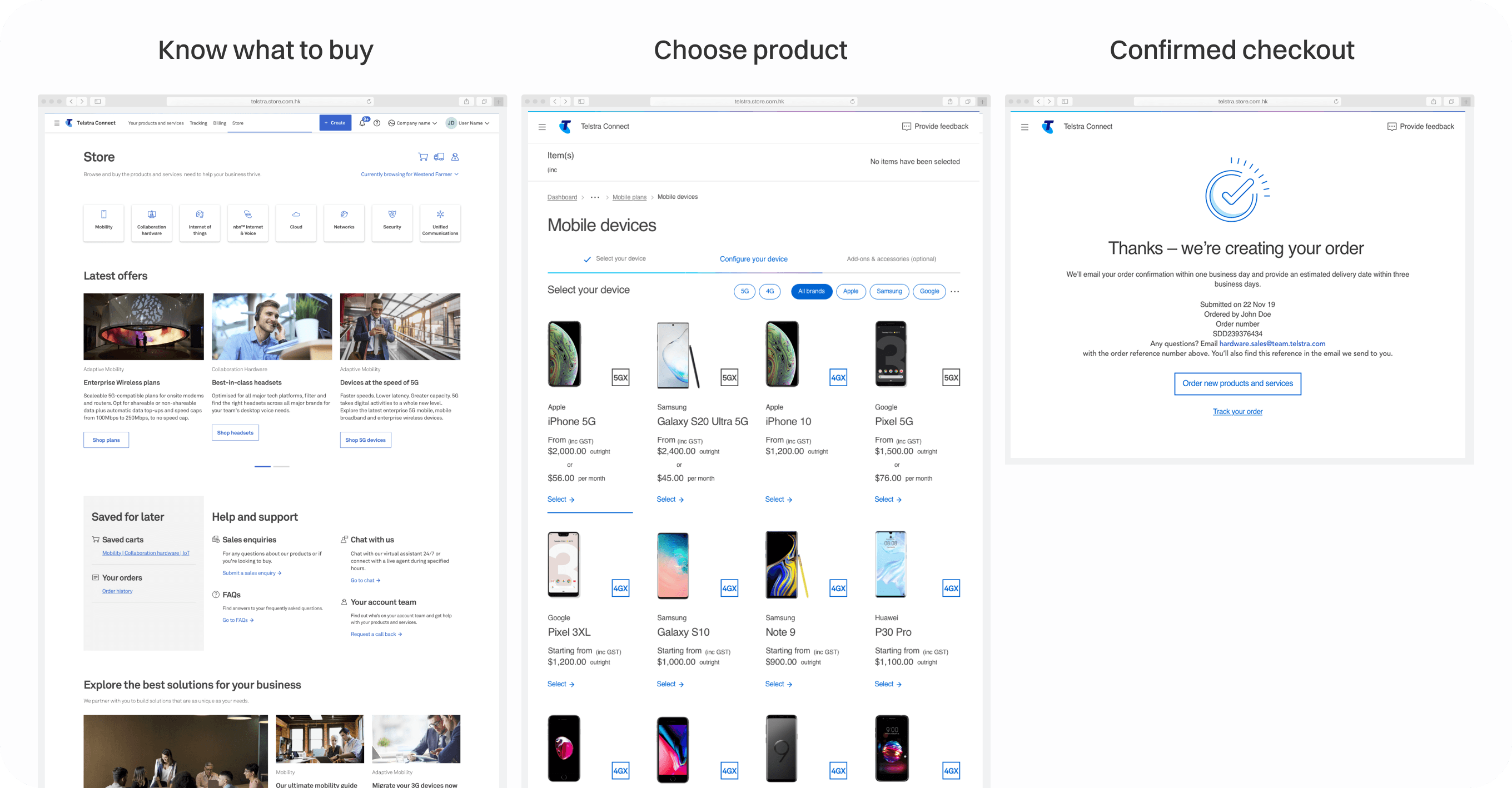
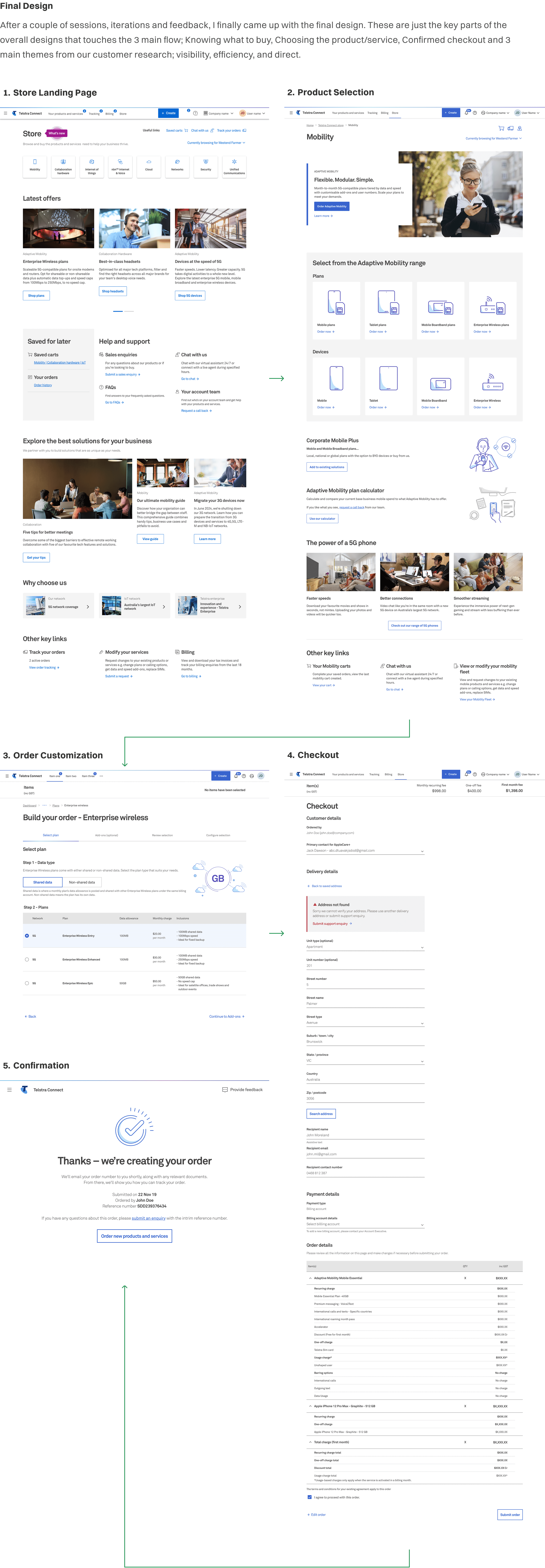
To determine the 3 main flows for this feature, I asked myself, what is the main point of this app, and what is the easiest way to get the user to finish their tasks.
I ended up with, Knowing what to buy, Choosing the product/service, and Confirmed checkout.
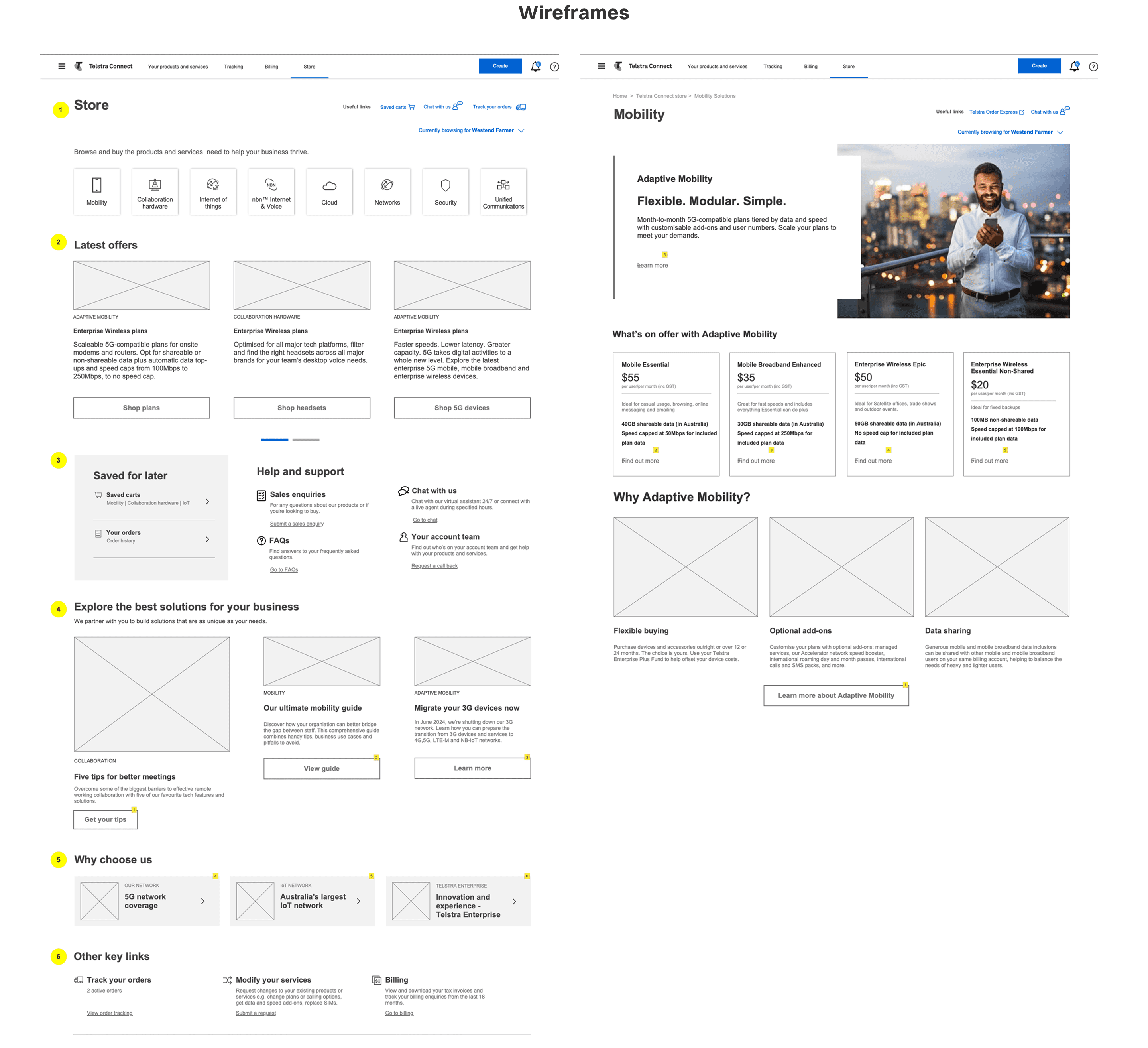
Design Iterations
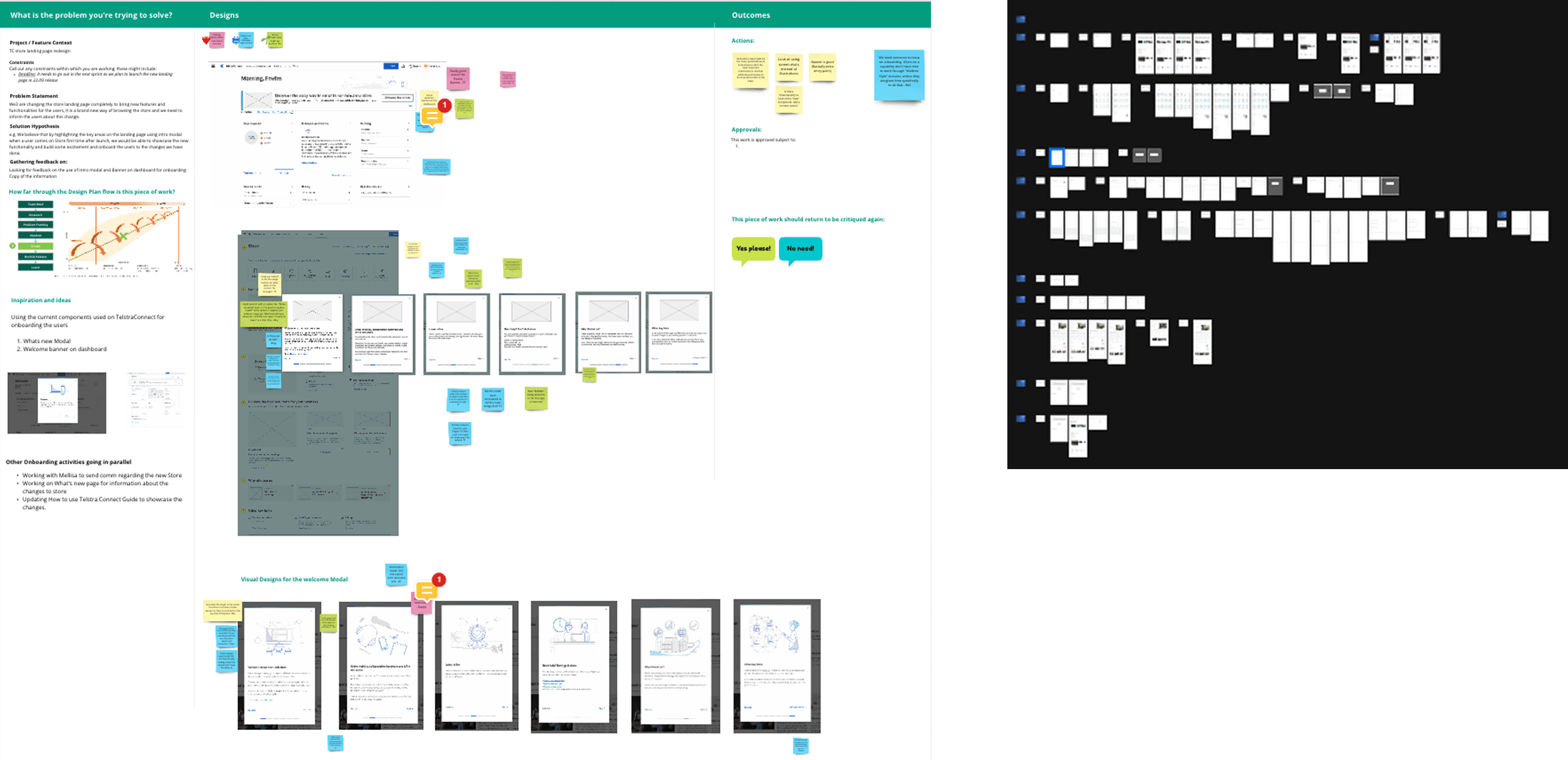
After I created my initial wireframes, I presented it to our design critique, which happens 3x a week where all the UX team members gather, (UX designers, UI Designers, UX writers, UX researchers) to have a critique session for our designs.
ABLE Design System
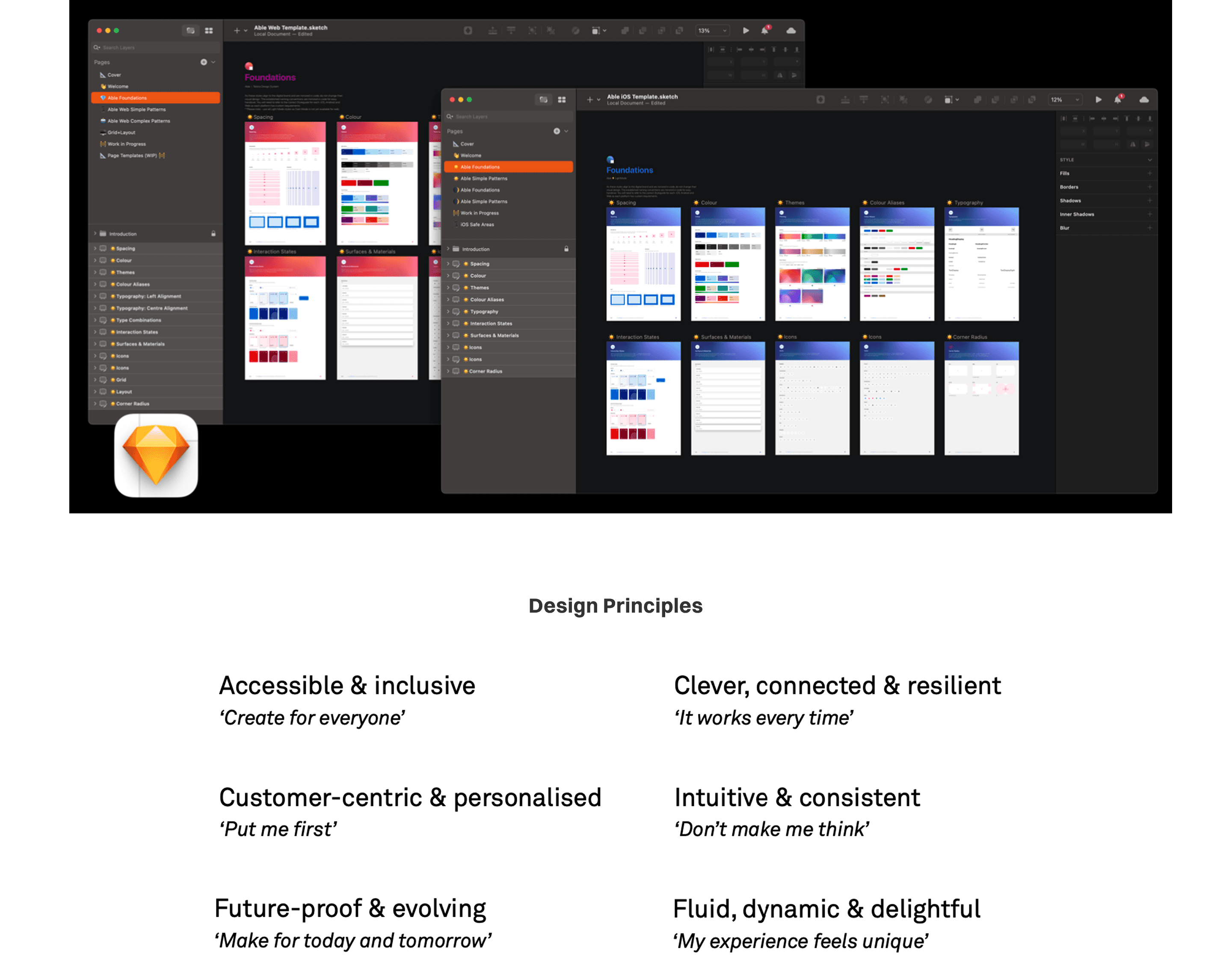
To touch upon the style guide, we based it on the ABLE Design System from Telstra. It's a user-centered approach aimed at creating even more user-friendly products. This system includes design assets, code, and principles that we use to guide our designs, and it's always evolving.
If I had more time...
Explore about simplifying more the actual buying process.
Add more flexibility to customize the product on the checkout page.
Test the feature for accessibility.
Takeaways
When initiating a project, it's crucial to carefully consider each component and element used in the design and its contribution to the final outcome. Continuously refer back to your research and data to assess whether your design effectively addresses the needs of your users and resolves their pain points.