Go back
My design process
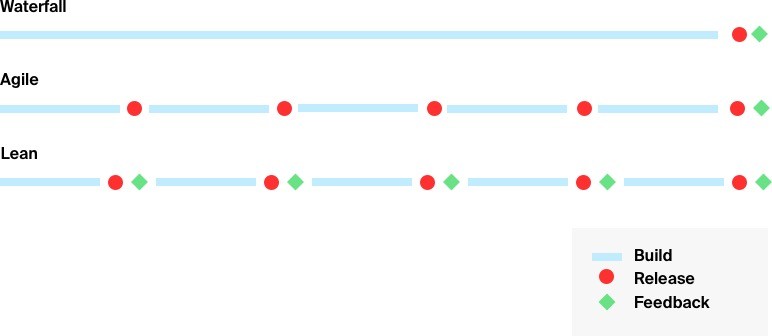
My approach is rooted in Lean UX—a simple, flexible, and collaborative way of working that mirrors Design Thinking but with a more direct, fast-moving rhythm. I break my process into three core phases: Think, Make, and Check.
My approach is rooted in Lean UX, a simple, flexible, and collaborative way of working that mirrors Design Thinking but with a more direct, fast-moving rhythm. I break my process into three core phases: Think, Make, and Check.
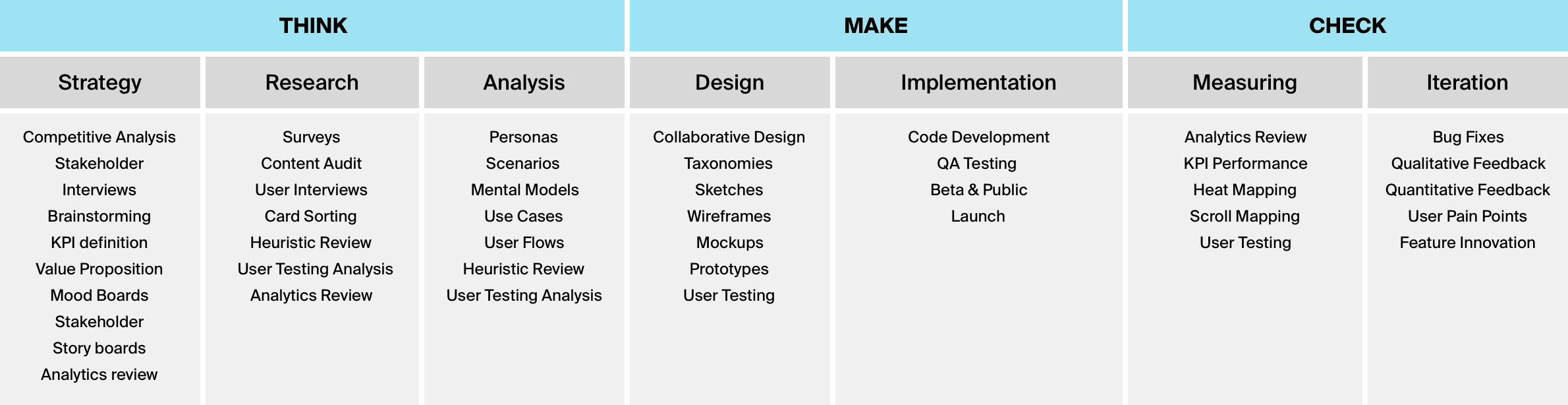
Think is all about understanding the problem—research, strategy, and shaping the direction.
Make is where ideas turn into wireframes, flows, prototypes, and eventually polished designs.
Check closes the loop through testing, validation, and iteration, making sure what we built actually works for real users.
I love this framework because it’s fluid and has no strict beginning or end - design evolves constantly, and this loop makes space for that. It helps teams move quickly, learn continuously, and improve products with every cycle.
Think is all about understanding the problem - research, strategy, and shaping the direction.
Make is where ideas turn into wireframes, flows, prototypes, and eventually polished designs.
Check closes the loop through testing, validation, and iteration, making sure what we built actually works for real users.
I love this framework because it’s fluid and has no strict beginning or end - design evolves constantly, and this loop makes space for that. It helps teams move quickly, learn continuously, and improve products with every cycle.
How I work
Collaboration, Research, and Strategy: I start by aligning with the Product Manager to clarify goals, requirements, and constraints. If we have access to user researchers or existing insights, I pull those in as well. From there, I map the problem through user flows, scenarios, and use cases to make sure we’re solving the right thing.
Design Creation: I begin with low-fidelity sketches or wireframes to explore ideas quickly. If something isn’t working—or needs an outside perspective—I bring it into critique with the design team. Once we’re aligned, I move into high-fidelity UI, keeping consistency with the design system while refining interactions and visual logic.
Review and Iteration: As the design takes shape, I collaborate closely with other designers and stakeholders to resolve issues, refine decisions, and polish the experience. After approval, the work moves into development, where I stay involved to support implementation. Before launch, I do a final UI review to ensure everything matches the intended experience.
Launch and Feedback: When the product goes live, we shift to validation—gathering feedback, reviewing analytics, and checking how users actually interact with the solution. If we uncover gaps or improvement areas (and we always do!), we loop back into Think → Make → Check to refine and evolve the experience.
Why This Process Works for Me
It keeps the team aligned, the work purposeful, and the momentum steady. It encourages learning over perfection. And most importantly, it ensures the design grows with the product, informed directly by the people using it.
How I work
Collaboration, Research, and Strategy: I start by aligning with the Product Manager to clarify goals, requirements, and constraints. If we have access to user researchers or existing insights, I pull those in as well. From there, I map the problem through user flows, scenarios, and use cases to make sure we’re solving the right thing.
Design Creation: I begin with low-fidelity sketches or wireframes to explore ideas quickly. If something isn’t working or needs an outside perspective, I bring it into critique with the design team. Once we’re aligned, I move into high-fidelity UI, keeping consistency with the design system while refining interactions and visual logic.
Review and Iteration: As the design takes shape, I collaborate closely with other designers and stakeholders to resolve issues, refine decisions, and polish the experience. After approval, the work moves into development, where I stay involved to support implementation. Before launch, I do a final UI review to ensure everything matches the intended experience.
Launch and Feedback: When the product goes live, we shift to validation, gathering feedback, reviewing analytics, and checking how users actually interact with the solution. If we uncover gaps or improvement areas (and we always do!), we loop back into Think → Make → Check to refine and evolve the experience.
Why This Process Works for Me
It keeps the team aligned, the work purposeful, and the momentum steady. It encourages learning over perfection. And most importantly, it ensures the design grows with the product, informed directly by the people using it.